
Blog
How Long Should a Divan Bed Last? (And Signs It’s Time to Replace)

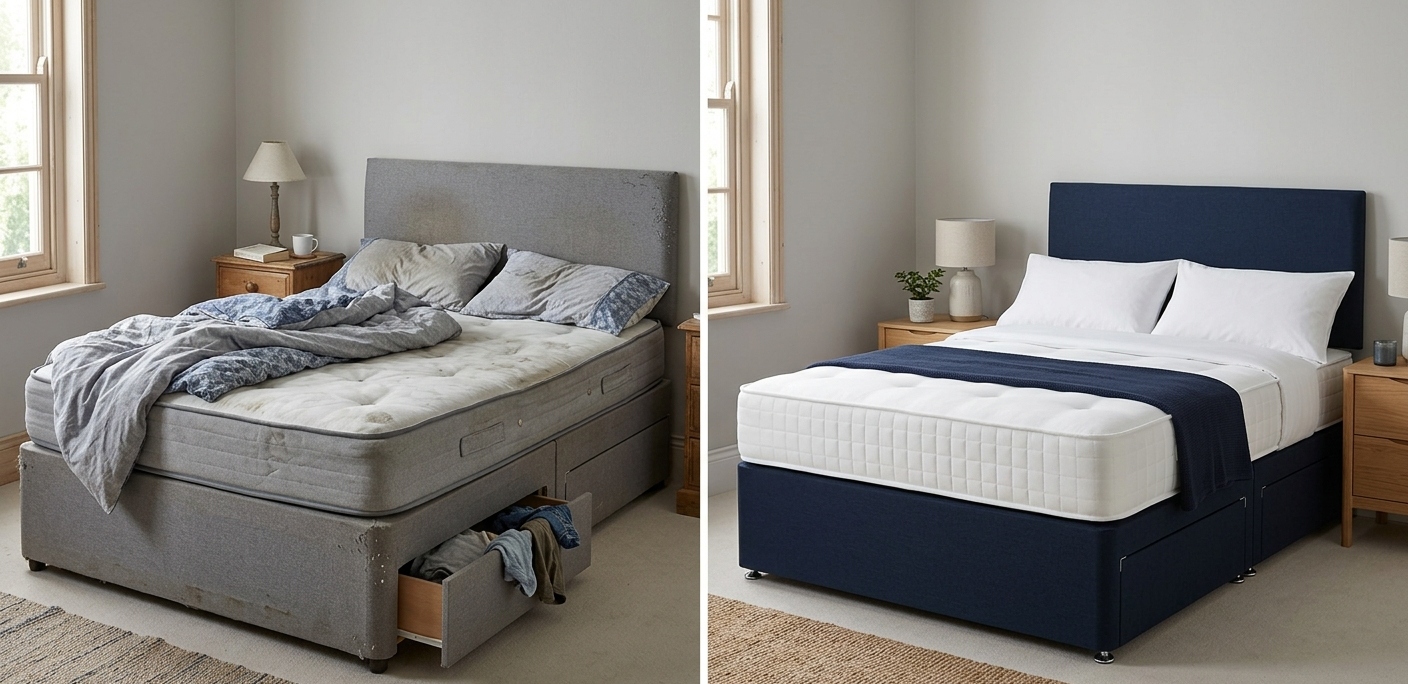
There’s a question most people never think to ask when they buy a bed. Not “Is it comfortable?” Not “Does it come with storage?” Not even “Will it fit up my stairs?”, although that one matters more than people expect. The question is this: how long is this thing actually going to last? It’s a fair question. A bed isn’t something you buy every year. It’s one of those purchases that quietly becomes part of your life; you stop thinking about it, stop noticing it, and just sleep on it every night until one morning you wake up with a bad back, and suddenly you’re very aware of it indeed.
The truth is, most people keep their divan bed for longer than they should. Not because they’re stubborn, but because beds deteriorate gradually, so gradually that you adjust to the changes without realizing you’re doing it. By the time it’s obviously time to replace, the bed has often been past its best for a year or two already. This guide covers everything honestly: how long a storage divan bed should realistically last, what affects that lifespan, the warning signs that tell you it’s time, and what to look for when you’re ready to replace it.
The Honest Answer: How Long Does a Divan Bed Last?
Let’s start with the number everyone wants. A good quality storage divan bed, well-made, used normally, and given basic care, should last between 8 and 12 years. Some last longer. Some don’t make it to 8 years. The range is wide because the lifespan depends on several factors that vary enormously from one bed to the next.
Here’s the key thing to understand: the base and the mattress age at different rates, and they don’t always give up at the same time. The divan base, the solid, fabric-covered box with the drawers, is the more durable of the two. It’s essentially a wooden frame covered in foam and fabric, with a drawer mechanism built in. There are no springs to lose tension, no slats to crack, and very few moving parts beyond the drawers themselves. A quality divan bed with a storage base, well-looked-after, can genuinely last 12–15 years without significant deterioration.
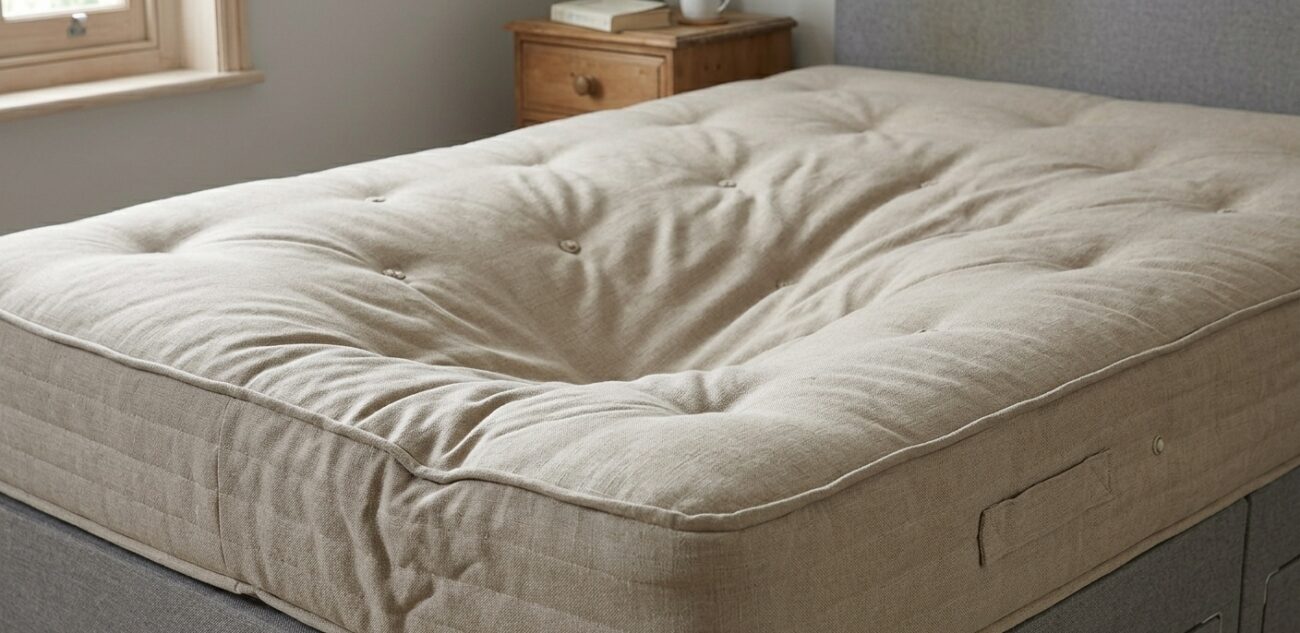
The mattress is the more vulnerable part of the setup. Mattress materials, foam, springs, fillings compress, break down, and lose their supportive properties over time. Most sleep experts recommend replacing a mattress every 7 to 10 years, regardless of how it looks from the outside. A mattress can feel fine from a visual inspection and still be providing significantly reduced support compared to when it was new.
This distinction matters because it affects how you think about replacement. You don’t always need to replace both at the same time. Sometimes the base is perfectly sound and only the mattress needs replacing. Other times, particularly with older, cheaper bases, both need to go together.
What Affects How Long a Divan Bed Lasts?
Understanding the factors that influence lifespan helps you both extend it and recognize when something has gone wrong earlier than it should.
Build Quality and Materials
This is the single biggest factor, and it’s determined at the point of purchase, not afterwards. A storage divan bed built with a solid timber internal frame, quality high-density foam padding, and smooth metal drawer runners will last significantly longer than one built with thin chipboard, low-density foam, and plastic drawer components. The frustrating reality is that you often can’t see these differences from the outside. Both beds might look identical in a product photo. This is why buying from a reputable retailer and checking specifically what the internal construction consists of matters more than most people realize.
Weight and Usage
A bed used by two adults every night experiences considerably more stress than one in a guest room used occasionally. This is obvious when stated, but people often forget to factor it into their expectations. If two adults sleep in a divan bed with storage every night, and one or both are heavier than average, the mattress in particular will compress and deteriorate faster than the manufacturer’s general lifespan guidance suggests. This isn’t a flaw; it’s simply physics.
Mattress Quality
A poor mattress on a great base degrades faster and makes the whole sleep experience worse sooner. A great mattress on a good base lasts longer and performs better throughout its life. The two components of a storage divan bed, base and mattress, are genuinely interdependent in this way.
Drawer Mechanism Care
For a divan bed with storage, the drawers are the component most likely to show wear first. Overloading drawers, forcing them when they stick, or allowing debris to accumulate on the runners all accelerate deterioration. A drawer mechanism that’s treated with reasonable care will outlast one that’s abused, sometimes by several years.
Environment and Positioning
Damp environments accelerate the deterioration of both foam and fabric. A bed in a poorly ventilated room, a basement bedroom, or near an external wall with condensation issues will age faster than one in a dry, well-ventilated space. Direct sunlight fades fabric and can dry out foam components over time. It’s worth being aware of if your bed sits near a large window.
Signs It’s Time to Replace Your Divan Bed
This is the practical section, the one you came for. Here are the signs that tell you your storage divan bed has had its time, clearly and honestly.
You Wake Up Stiff, Sore, or Tired, Regularly
This is the most important sign and the one most people dismiss for too long. One bad night’s sleep happens to everyone. A week of them might be stress or illness. But if you’re consistently waking up with a stiff back, aching hips, sore shoulders, or a neck that needs 20 minutes to loosen up, and this has been happening for weeks or months, your bed is the most likely culprit. The connection between a deteriorated mattress and body pain in the morning is well-established. When the materials inside your mattress have compressed past the point of providing proper spinal alignment, your body compensates throughout the night in ways that cause pain and disrupted sleep. Don’t adjust to it. Investigate it.
You Can Feel the Springs or the Base Through the Mattress
This one is unambiguous. If you can feel individual springs pressing against you, or the edge of the divan base through the mattress, the internal materials of the mattress have compressed beyond any reasonable level of comfort or support. A new mattress has substantial padding layers between you and the support structure. When those layers are gone, what’s left is springs or a firm surface, neither of which makes for restorative sleep.
The Mattress Has Visible Sagging or Lumps
Stand at the foot of the bed and look along the surface of the mattress from the side. A healthy mattress has a flat, consistent surface. A mattress that needs replacing will show visible dips, particularly in the areas where people sleep most, or raised areas where the filling has shifted unevenly. Even a few centimeters of sag represents a significant change in the support the mattress is providing. Your spine is no longer being held in the neutral position it needs throughout the night.
The Divan Base Creaks, Shifts, or Feels Unstable
A solid storage divan bed base should be exactly that: solid. It should not creak when you move in the night. It should not shift or rock when you sit on the edge. The two sections should remain firmly connected with no movement at the join. If your base has developed creaks, particularly persistent ones that can’t be resolved by tightening the connector bar, it’s a sign the internal structure is compromised. A creaking base often means the timber frame inside has cracked, joints have worked loose, or the foam padding has compressed to the point where the internal components are making contact they shouldn’t.
The Storage Drawers No Longer Work Properly
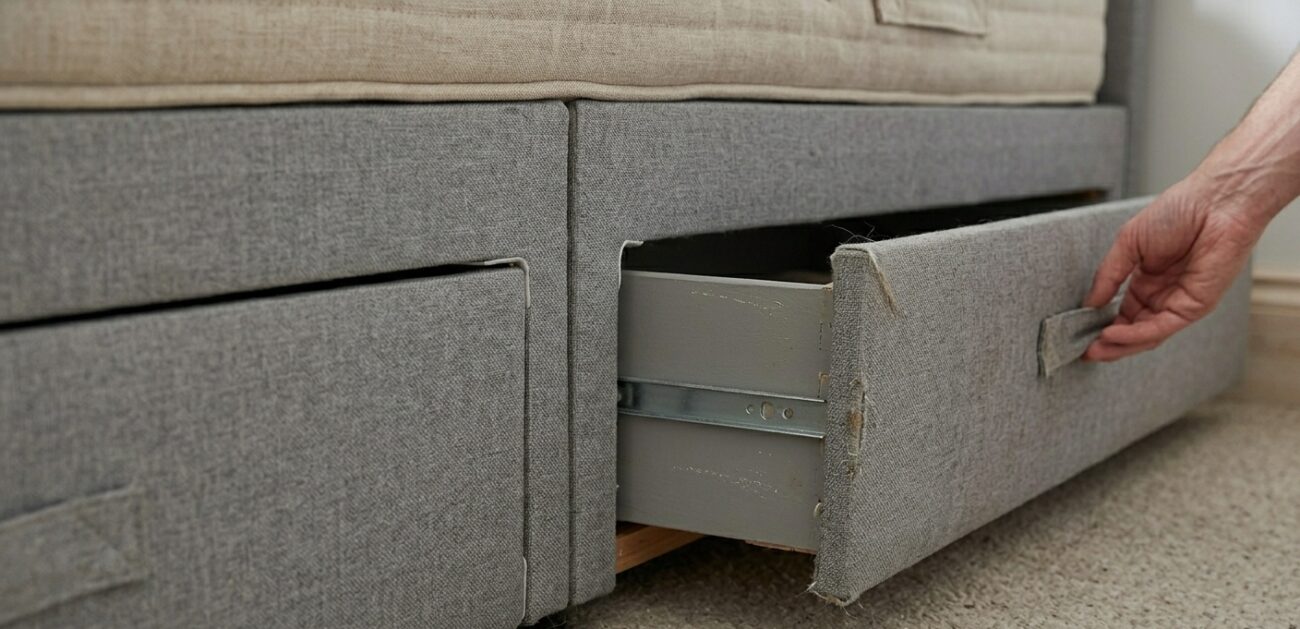
For anyone with a divan bed with storage, the condition of the drawers is a practical daily indicator of the base’s overall health. Drawers that once glided smoothly and now stick, catch, or require force to open and close are telling you something. Sometimes it’s simply debris on the runners, easy to fix. But persistent sticking that can’t be resolved by cleaning and realigning the drawers often indicates the base itself has shifted, sagged, or warped in ways that affect the geometry of the drawer openings. When the base changes shape enough to affect drawer function, it’s changing shape in ways that affect everything else too.
The Fabric Is Significantly Deteriorated
Surface fabric wear, pilling, fading, and small tears don’t automatically mean the bed needs replacing. But significant deterioration of the base covering can allow moisture to penetrate the internal components, which accelerates their deterioration. It also indicates the base has had substantial use. If the fabric is heavily worn, particularly along the edges and corners, it’s a useful prompt to assess the overall condition of the base honestly.
You Simply Sleep Better Elsewhere
This is the test most people overlook, and it’s one of the most revealing. If you sleep noticeably better in a hotel, at a friend’s house, or even in a spare room, if you wake up feeling more rested in a different bed than you do in your own, that’s significant information. It means the problem isn’t your sleep habits, your stress levels, or the season. It’s the bed. Trust that comparison. It’s telling you something important.
How to Extend the Life of Your Storage Divan Bed
You can’t make a bed last forever, but you can make it last longer. Here’s what genuinely helps:
- Rotate your mattress regularly. Every three to six months, rotate your mattress 180 degrees so the head end becomes the foot end. This distributes wear more evenly across the whole surface rather than concentrating it in the areas where you sleep. If your mattress is double-sided, flip it too at the same time.
- Use a mattress protector from day one. A quality mattress protector keeps moisture, sweat, and debris from penetrating the mattress surface. This is one of the most effective ways to extend mattress lifespan, and it costs a fraction of what a new mattress does.
- Don’t overload the drawers. A storage divan bed is designed to hold bedding, clothing, and similar items, not to function as a loft extension. Overloading puts unnecessary stress on the drawer runners and the base structure, accelerating wear on both.
- Keep the room ventilated. Open windows regularly, use a dehumidifier if your bedroom tends towards dampness, and pull the duvet back in the morning for at least 20 minutes before making the bed. All of these reduce the moisture that accumulates in mattress materials overnight.
- Check and tighten the base connector annually. The link bar or bolt that holds the two base sections together can loosen slightly over time with normal movement. A quick check and hand-tightening once a year keeps the base solid and prevents the progressive wobbling that can develop from a loose joint.
- Clean the drawer runners periodically. A light wipe with a dry cloth every few months keeps debris from building up on the drawer runners of your divan bed with storage. It takes two minutes and prevents the sticking that eventually becomes drawer damage.
When to Replace the Mattress vs the Whole Bed
This is a genuinely important distinction that can save you money, or, if you get it wrong, cost you more in the long run.
Replace the mattress only if:
- The divan base is still solid, stable, and creak-free.
- The drawers on your storage divan bed still work smoothly.
- The base fabric is in reasonable condition.
- The base is less than 8 to 10 years old.
In this situation, a new mattress on a sound base will give you almost all the benefits of a completely new bed at a significantly lower cost. This is often the right call at the 7–8 year mark when the mattress has reached the end of its useful life, but the base is still sound.
Replace the whole bed, base and mattress if:
- The base creaks, shifts, or feels unstable.
- The drawers are permanently stiff or misaligned.
- The base is over 10 years old, regardless of how it looks.
- The base fabric is heavily deteriorated.
- You’re changing bedroom size or style and want a fresh start.
There’s no point putting an expensive new mattress on a base that’s on its last legs. The base affects how the mattress performs and ages; a deteriorated base will shorten the life of a brand-new mattress placed on top of it.
What to Look for in Your Next Storage Divan Bed
When the time comes to replace, here’s what to focus on to make the next bed last as long as possible:
- Internal frame construction: Ask specifically whether the base uses a solid timber frame internally. This is the foundation of durability; everything else sits on top of it.
- Drawer quality: Check the drawer runner material; metal runners outlast plastic ones significantly. If possible, physically test the drawers before buying, or check reviews specifically mentioning drawer smoothness and durability.
- Fabric quality: Better fabric resists pilling, fading, and small tears for longer. If the option exists to choose a slightly higher quality fabric finish, it’s usually worth the small additional cost.
- Mattress compatibility: Make sure your new storage divan bed base is compatible with the mattress type you’re planning to use; most are, but it’s always worth confirming.
- Warranty: A reputable retailer should offer at least a 2-year guarantee on the base and drawer mechanism. Longer warranties, 3–5 years, are a good indicator that the manufacturer is confident in the product’s durability.
Conclusion: Know When to Let Go
A great storage divan bed is one of the most practical, comfortable, and long-lasting pieces of furniture in your home. With proper care and reasonable use, it will serve you well for a decade or more. But even the best bed has a lifespan. And the longer you sleep on one that’s past it, the more you pay for it in disrupted sleep, in morning aches, in days that start on the wrong foot because the night before wasn’t restful enough.
The signs are there when it’s time: morning stiffness that won’t go away, springs you can feel through the mattress, drawers that used to glide and now grind, a base that creaks in the night, sleep that’s consistently better everywhere except your own bed. When those signs appear, the kindest thing you can do for yourself is listen to them.
Ready to find your next storage divan bed? [[LINK:0:https%3A%2F%2Fappexbeds.uk%2Fproduct-category%2Fstorage-divan-bed%2F: Browse our full collection at Appex Beds]], quality divan beds with storage in every size, built to last, with free UK mainland delivery on every order.
Frequently Asked Questions
How long should a divan bed base last?
A good quality storage divan bed base should last between 10 and 15 years with normal use and basic care. The base is the more durable component of the setup; its solid construction means there are fewer parts to wear out compared to a slatted frame. The mattress on top typically needs replacing sooner, usually every 7–10 years.
Should I replace my mattress or my whole divan bed?
It depends on the condition of the base. If the divan bed base is still solid, creak-free, and the storage drawers work smoothly, replacing just the mattress is often the right and more cost-effective choice. If the base is creaking, unstable, or over 10 years old, replacing both together gives you the best long-term result; a deteriorated base shortens the life of a new mattress placed on top of it.
Can a divan bed base affect my sleep quality?
Yes, more than most people realize. A solid, stable divan bed base provides the consistent surface that allows your mattress to perform as it was designed to. If the base has warped, sagged, or become unstable, it changes the support profile of the mattress on top, which directly affects spinal alignment during sleep. Regular morning stiffness or body pain is often linked to base deterioration, not just mattress wear.
How do I know if my divan storage drawers need replacing?
Drawers that have become permanently stiff, misaligned, or difficult to open after cleaning and realigning the runners often indicate the base structure has shifted or warped. In some cases, replacement runners can be sourced and fitted; contact your retailer about spare parts. If the drawer opening itself has changed shape due to base deterioration, the base likely needs replacing rather than just the drawer components.
What is the best way to make a storage divan bed last longer?
The most effective steps are rotating your mattress every 3–6 months, use a quality mattress protector from day one, keep the room well-ventilated to reduce moisture build-up, don’t overload the storage drawers, and check the base connector bar annually to keep it tight. These simple habits can add years to the working life of both the base and the mattress.